NAACP joined Nolan Xavier Wells’ legal team
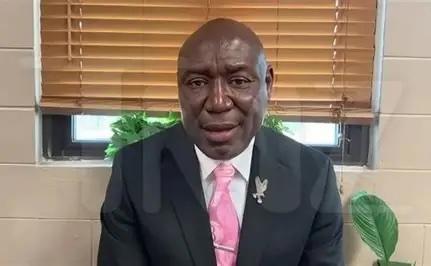
By Frederick H. Lowe, BlackmansStreet.Today The NAACP, the nation’s oldest civil rights organization, has drawn a line in the sand to determine what happened to Nolan Wells, who went out with White friends on the 4th of July weekend and later was found dead near a remote Mississippi island. Wells’s parents, Elmore and Christine Wonsley, thanked the NAACP for its support.Kirsten Clark, the NAACP’s general counsel, said Monday has joined the Wells’ legal team, which includes celebrated attorney Benjamin Cump.Derrick Johnson, NAACP president and CEO, said, “Too often, the deaths of young Black people are dismissed, downplayed, or inadequately investigated unless we demand answers. Our involvement in this case is part of our ongoing commitment to make sure those answers are pursued with urgency and respect for Black lives.” The NAACP joins a growing list of organizations and individuals, including the Urban League, the National Action Network, Tyler Perry, Colin Kaepernick, Terrell Owens, and LeBron James, who donated money or offered support in helping to unravel the mystery surrounding Wells’ death. The NAACP also released a study by the Centers for Disease Control (CDC) showing that Black men and boys are often the victims of violent attacks, including by police officers who were founded by plantation owners to capture and return runaway slaves to the plantation. According to the CDC’s National Violent Death Reporting System published in 2022, Black males experienced the highest rate of deaths classified as being of undetermined intent among males, at 5.8 deaths per 100,000 population. This troubling disparity highlights why unanswered questions surrounding deaths involving young Black men cannot be met with silence or delay, and why families deserve complete transparency and accountability from those charged with investigating them. Wells lived in Mississippi with his parents. Mississippi has a history of lynching Black people, based on studies from Tuskegee University. In 2015, the Equal Justice Initiative reported more than 4,400 documented lynchings of black people between 1877 and 1950 — an average of 60 lynchings each year. During Reconstruction, there were more than 160 lynchings each year on average, a total of 2,000 from 1865 to 1876. There have been more than 6,400 lynchings since the end of the Civil War, not including those that occurred after 1950. It has not been determined if Wells was lynched. It’s not clear what happened to the 18-year-old football player who attended Southwest Mississippi Junior College. Yet there are photographs of Black men and women who have recently been lynched in Mississippi. The latest being Tasha Fortune, a 29-year-old woman who was found hanging from a tree behind an abandoned building in Jackson, Mississippi. |
 |